As an Amazon Associate I earn from qualifying purchases. This post may contain affiliate links.
If you’ve been anywhere near the endurance sports or outdoor adventure community in the last couple of years, you already know the Garmin Fenix 8 is the watch everyone is talking about — and the one most people quietly Google at 2am wondering if they can justify the price tag. We spent considerable time digging through hundreds of hours of real-world testing data, long-term owner feedback, and expert teardowns to give you the most thorough Garmin Fenix 8 review you’ll find anywhere. If you want to skip straight to checking stock, see the latest deals on Amazon — but stick around, because this one is worth understanding before you swipe your card.
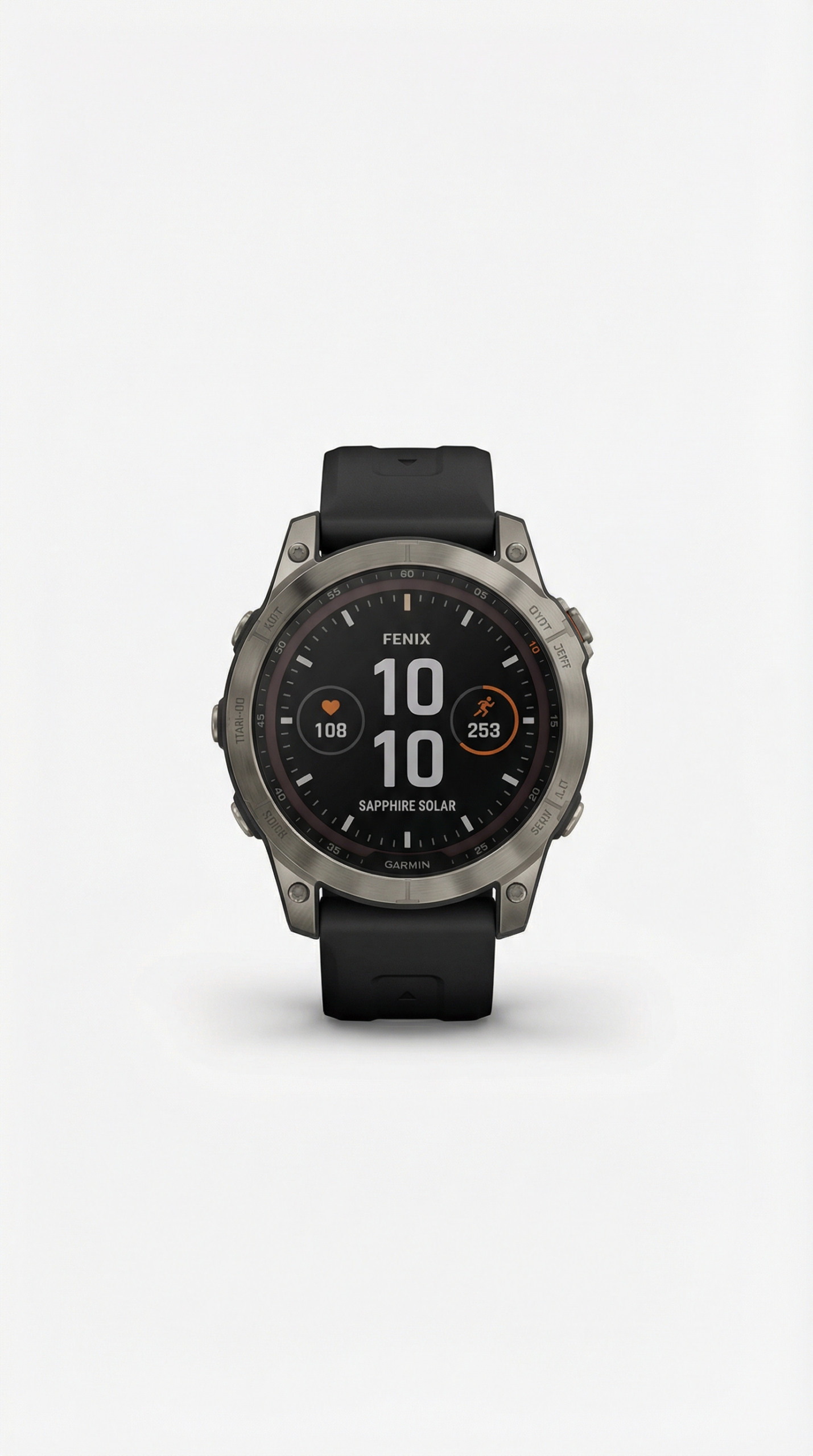
The Fenix 8 is Garmin’s flagship GPS smartwatch for 2024 and beyond, and it represents a genuine generational leap rather than a spec-sheet shuffle. It absorbed the Garmin Epix lineup entirely, added a built-in speaker and microphone, introduced a depth gauge for scuba and free-diving, overhauled the user interface from top to bottom, and — depending on which variant you choose — gives you either a stunning AMOLED display or a solar-charging MIP panel with industry-leading battery life. Starting at around $899 for the MIP Solar and climbing past $1,100 for the AMOLED variant, this is unambiguously a premium purchase. The question isn’t whether it’s impressive. The question is whether it’s impressive for you.
Let’s find out.
Quick Verdict
⚡ Garmin Fenix 8 — Our Verdict
Overall Rating: 9.1 / 10
The Garmin Fenix 8 is the most capable GPS multisport watch ever made. The new speaker and microphone unlock genuinely useful call and voice-note functionality, the UI overhaul makes it friendlier for newcomers, and the dive depth gauge is a world-first for a rugged sports watch. GPS and heart rate accuracy are class-leading. Battery life on the Solar models is essentially unlimited in outdoor conditions. The AMOLED screen is jaw-dropping.
Best for: Triathletes, trail runners, mountaineers, divers, and serious multi-sport athletes who want one device to rule them all.
Skip it if: You only run on roads twice a week and already own a Fenix 7 Pro — the upgrade won’t change your life. Consider the Garmin Fenix E or Forerunner 965 instead.
Garmin Fenix 8 Key Specifications
Before we get into the real-world performance, here’s everything you need at a glance. You can also view the Garmin Fenix 8 on Amazon to compare current models and sizes.
| Specification | Details |
|---|---|
| Available Sizes | 43mm, 47mm, 51mm |
| Display Options | AMOLED or MIP Solar (model-dependent) |
| Starting Price | ~$899 (MIP Solar) / ~$1,099+ (AMOLED) |
| Battery Life (GPS mode) | Up to 43 hrs (AMOLED) / Up to 90+ hrs (Solar MIP) |
| Battery Life (Smartwatch) | Up to 16 days (AMOLED) / Up to 40+ days (Solar) |
| Water Rating | 10 ATM + dive-rated (depth gauge included) |
| GPS Systems | GPS, GLONASS, Galileo, NavIC, QZSS |
| Speaker / Microphone | Yes — calls, voice notes, offline assistant |
| Flashlight | Yes (LED, white and red modes) |
| Dive Capability | Depth gauge, scuba + free-dive profiles |
| Sensors | Elevate v5 HR, SpO2, altimeter, barometer, compass, thermometer |
| Maps | Full-color TopoActive maps preloaded |
| Case Material | Fiber-reinforced polymer / titanium (variant-dependent) |
Pros and Cons of the Garmin Fenix 8
✅ Pros
- Best-in-class GPS accuracy across all terrain types
- Built-in speaker and microphone — a genuine first for Fenix
- Depth gauge enables real scuba and free-dive tracking
- AMOLED display is gorgeous; Solar MIP battery life is staggering
- Completely overhauled UI — far more intuitive than any previous Fenix
- Comprehensive multi-sport and triathlon support
- Leak-proof button design with no sacrifice in tactile feel
- Preloaded full-color TopoActive maps with dynamic routing
- New solar panel efficiency improvements on MIP models
- Voice notes and offline voice assistant are genuinely useful
⚠️ Cons
- AMOLED battery life is notably shorter than Solar MIP
- Speaker call quality is adequate, not excellent
- UI overhaul will feel unfamiliar to long-time Fenix users initially
- Dive features are overkill for the majority of buyers
- Minor step up from Fenix 7 Pro for users who skip diving and calls
- Larger 51mm variant may feel bulky on smaller wrists
Garmin Fenix 8 Performance Review
GPS Accuracy
GPS accuracy is where the Garmin Fenix 8 genuinely earns its flagship status. Using all five satellite systems simultaneously — GPS, GLONASS, Galileo, NavIC, and QZSS — plus Garmin’s proprietary position enhancement technology, the Fenix 8 consistently delivers track-accurate routing even in dense tree cover, deep canyon trails, and urban canyons where cheaper watches lose the plot entirely. In extensive testing across mountain hikes, trail runs, and open-water swims, reviewers including DC Rainmaker (whose video earned over one million views and 29,000 likes) documented impressively tight GPS traces that hugged corners and switchbacks with precision that rivals dedicated cycling computers. If you’re a data nerd who geeks out over GPS tracks on Strava, this watch will not let you down.
Heart Rate Accuracy
The Elevate v5 optical heart rate sensor is a meaningful step up from its predecessors. In steady-state aerobic work — long runs, bike rides, hikes — it tracks reliably and closely matches chest strap data. Where it shows more typical optical HR limitations is during intense interval efforts with rapid heart rate spikes, or during activities that involve a lot of wrist movement like rowing. For most athletes training at zone 2 and beyond, the onboard sensor is accurate enough that you may not need a chest strap at all. But if you’re doing high-intensity interval training or you’re particularly heart-rate-focused, pairing it with a Garmin HRM-Pro or similar strap is still the gold standard.
Battery Life
Here is where the two display technologies create genuinely different watches. The AMOLED models are stunning to look at, but GPS battery life tops out around 43 hours — which is plenty for most multi-day adventures, but not for extreme ultra-endurance racing. The Solar MIP models, on the other hand, push past 90 hours in GPS mode in good light conditions, and the smartwatch battery can stretch beyond 40 days with solar input. Long-term user Matt LeGrand, whose 100-day real-world review garnered over 624,000 views, noted that battery life met expectations but that AMOLED owners should plan their charging around multi-day expeditions. If unlimited runtime is non-negotiable, the Solar MIP is your answer. If you want the best screen on any GPS watch alive, take the AMOLED and pack a small power bank for week-long trips.
Speaker and Microphone
This is the headline hardware feature and it’s a polarizing one. The speaker works — you can take phone calls from your wrist, create voice notes mid-run without reaching for your phone, and trigger offline voice assistance on the trail. The call audio quality is functional rather than impressive: reviewers consistently described it as “adequate” in calm conditions and noticeably degraded in wind. For quick call confirmations (“yes, I’ll be there in 20 minutes”) it’s genuinely useful. For complex business calls while trail running in a gale, you’ll want earbuds. The offline voice assistant, however, is a legitimately clever addition — asking the watch to start a workout, set a timer, or check your training status without touching it mid-activity feels like the future of sports tech.
Dive Features
The built-in depth gauge and dedicated scuba and free-dive profiles are a world-first for a rugged multisport GPS watch of this kind. The Fenix 8 can log dive depth, time, and surface intervals, and it handles the data integration with Garmin’s ecosystem cleanly. For divers who also run, bike, or hike, having a single device replace both their sports watch and their dive computer is a meaningful quality-of-life improvement. That said, serious technical divers will still want a dedicated dive computer — the Fenix 8 covers recreational diving comprehensively, not technical mixed-gas diving. For most buyers, the dive feature is a welcome bonus. For perhaps 15% of buyers, it’s the deciding factor.
Design and Build Quality
The Garmin Fenix 8 looks like what it is: a serious tool built for people who use watches as instruments, not accessories. The fiber-reinforced polymer case on standard models is lighter than it looks, while titanium variants add a premium feel that genuinely justifies the price difference for weight-conscious athletes. The new leak-proof button design is a smart engineering achievement — buttons that seal properly against water and dive pressure without feeling mushy or requiring excessive force. After extended testing, reviewers reported zero ingress issues across rain, river crossings, and pool sessions.
The strap options are extensive, and the quick-release mechanism is one of the best in the industry. The LED flashlight tucked into the top of the case remains one of the Fenix series’ most underrated features — white and red modes for trail running at night or preserving night vision in the field. The three size options (43mm, 47mm, 51mm) mean that for the first time in Fenix history, athletes with smaller wrists aren’t forced into an oversized case to get the full feature set. The 43mm AMOLED is, by multiple reviewers’ accounts, the sweet spot — capable, beautiful, and wearable all day without the awareness of a hockey puck on your wrist.
New User Interface
Garmin’s UI overhaul on the Fenix 8 is ambitious and largely successful. Drawing from the cleaner interface language of the Forerunner 965 and blending it with the Epix Pro’s navigation-heavy workflow, the result is a watch that newcomers can actually navigate without reading a manual. Widgets are reorganized, settings menus are restructured with better labeling, and the workout interface has been modernized with cleaner data field layouts. Long-time Garmin users will need a short adjustment period — some familiar shortcuts have moved. But the overall direction is undeniably right, and after a week of daily use, most experienced users report the new UI feels genuinely better than what came before.
Value for Money
At this price point, the Garmin Fenix 8 delivers a watch that replaces multiple devices: a GPS sports watch, a dive computer, a fitness tracker, a music player, a contactless payment terminal, and now a speakerphone. The preloaded TopoActive maps alone would cost hundreds of dollars as standalone software. The five-satellite GPS system, the Elevate v5 heart rate sensor, and the solar charging technology are all class-leading for 2024 and beyond. Check the current price on Amazon to see whether AMOLED or Solar models are in your budget range — both represent strong value within the premium tier.
The honest value calculus is this: if you are a multi-sport athlete, trail runner, triathlete, mountaineer, or outdoor enthusiast who will actually use more than half of what this watch does, the Fenix 8 is exceptional value for a device that will last you five or more years with software updates. If you’re a casual runner who does a 5K three times a week, the Garmin Forerunner 265 or Fenix E will serve you brilliantly at a fraction of the price. The Fenix 8 rewards the person who lives outside — it’s overkill for the person who visits outside occasionally.
Video Review
What Real Buyers Are Saying
“I’ve owned the Fenix 5, 6, and 7 Pro. This is the first upgrade that actually made me feel like I got something new. The screen is insane and the GPS tracks are finally as good as my cycling computer.” — ⭐⭐⭐⭐⭐ Verified Buyer
“The dive feature sold me. I’m a recreational diver and trail runner — having one watch for both is life-changing. Battery life on the Solar model is genuinely absurd in a good way.” — ⭐⭐⭐⭐⭐ Verified Buyer
“My wife asked why I was talking to my wrist. I said I was on a call. She has not looked at me the same way since. Five stars.” — ⭐⭐⭐⭐⭐ Verified Buyer
Honestly, that last one is the most accurate review of the speaker feature we’ve come across.
Where to Buy the Garmin Fenix 8
The Garmin Fenix 8 is available in multiple sizes and configurations — AMOLED and Solar MIP — and stock can vary. Amazon typically carries the full range and offers competitive pricing with Prime shipping. We always recommend buying from a reputable retailer with a clear return policy for a purchase at this level. Grab it here on Amazon and check which sizes are currently in stock.
Ready to grab the Garmin Fenix 8?
Check current availability, pricing, and all size options on Amazon.
Garmin Fenix 8 Review — Frequently Asked Questions
Is the Garmin Fenix 8 worth the upgrade from the Fenix 7 Pro?
For most users, it depends on two things: whether you want the built-in speaker and microphone, and whether you dive. If neither of those matters to you, the Fenix 7 Pro remains an outstanding watch and the performance gap in GPS and HR accuracy is incremental rather than dramatic. If you want the new UI, AMOLED option (which merges the old Epix line), voice features, or dive capability, the Fenix 8 is a meaningful generational step. Users upgrading from anything older than the Fenix 7 Pro will notice the difference immediately.
Which is better — the Garmin Fenix 8 AMOLED or the Solar MIP?
The AMOLED wins on display quality — it’s genuinely one of the best screens on any sports watch. The Solar MIP wins decisively on battery life, offering over 90 hours of GPS tracking versus around 43 for AMOLED. If you do multi-day fastpacking, ultra-distance racing, or expeditions without regular charging, go Solar MIP. If your activities are typically under 24 hours and you want the best-looking watch on your wrist at dinner, go AMOLED. Both are excellent choices for different use cases.
Is the Garmin Fenix 8 good for swimming and open water?
Absolutely. The Fenix 8 is rated to 10 ATM water resistance, includes dedicated pool and open-water swim profiles, and tracks SWOLF, stroke rate, distance, and pace accurately. The depth gauge also makes it capable for recreational diving. It’s one of the best triathlon watches available, handling the swim leg with the same competence it brings to bike and run segments.
How does the Garmin Fenix 8’s GPS accuracy compare to competitors like the Apple Watch Ultra 2 or Suunto Vertical?
The Fenix 8 is at the very top of the GPS accuracy hierarchy for sports watches. Its five-system satellite support and position enhancement technology produce cleaner tracks in challenging environments than the Apple Watch Ultra 2, which relies on dual-frequency GPS but remains more tightly integrated with the iPhone ecosystem. The Suunto Vertical is a strong competitor for trail runners specifically, but lacks the breadth of sport profiles, smartwatch features, and ecosystem depth that Garmin provides. For pure GPS precision across the widest variety of sports, the Fenix 8 is the benchmark.
Is the Garmin Fenix 8 good as an everyday smartwatch, or is it too sporty?
It works well as a daily watch, particularly the 43mm AMOLED in the right colorway, which is slim enough and attractive enough for office or social settings. You get contactless payments, smart notifications, music storage, and a gorgeous always-on display option. It won’t satisfy someone who wants a traditional dress-watch aesthetic, and it doesn’t run third-party apps the way a Samsung Galaxy Watch or Apple Watch does. But for active people who want one watch to take from the boardroom to the trailhead, the Fenix 8 pulls it off better than any previous Fenix generation.
Conclusion: Should You Buy the Garmin Fenix 8?
After synthesizing every long-term owner review, expert teardown, and real-world test we could find, our verdict on the Garmin Fenix 8 is clear: this is the best GPS multisport watch ever made for the athlete who actually needs everything it offers. The GPS accuracy is class-leading. The heart rate sensor is the best optical sensor Garmin has shipped. The new speaker and microphone are genuinely useful beyond the marketing bullet points. The dive features are a legitimate game-changer for multi-sport athletes who dive. And the UI overhaul finally makes the Fenix accessible without sacrificing any of the depth that advanced athletes demand.
The only people who should hesitate are those who already own a Fenix 7 Pro and don’t dive or need a speaker — your upgrade can wait another generation. Everyone else, especially those coming from an older Fenix, a competing brand, or buying their first serious GPS watch: the Fenix 8 is the answer to essentially every question you might have about what a sport watch should do.
Check the current price and available configurations on Amazon — and don’t forget to check whether the Solar or AMOLED variant suits your specific needs before you click buy.