As an Amazon Associate I earn from qualifying purchases. This post may contain affiliate links.
Let’s be honest — most of us have no idea how badly we sleep until something shoves a number in our face every morning. Enter the Oura Ring Gen 3, a titanium band that sits quietly on your finger while you sleep and then delivers a verdict on your life choices with the confidence of a disappointed doctor. We’ve spent serious time with this device, pored over hundreds of user reviews, and watched more unboxing videos than is probably healthy — all so you don’t have to. This Oura Ring Gen 3 review covers everything: what it does brilliantly, where it frustrates, and the elephant in the room that is its mandatory subscription model.
Before we dive in, a note: the smart ring market has changed significantly since the Gen 3 launched. The Oura Ring Gen 4 is now available, and competitors like the Ultrahuman Ring AIR have entered the scene with compelling subscription-free alternatives. All of that context matters here — and we’ll address it. But if you’re considering picking up a Gen 3, there are still deals to be found, and you can check the current price on Amazon to see whether it makes sense right now.
Quick Verdict
⭐ Our Rating: 4.1 / 5
The Oura Ring Gen 3 is genuinely impressive health-tracking hardware wrapped in a frustrating business model. Sleep tracking is best-in-class. The readiness score is legitimately useful. The form factor is elegant and unobtrusive. But the $5.99/month subscription is a dealbreaker for many — especially when competitors now offer similar (or better) data without recurring fees. If you find it at a reduced price and you’re committed to the subscription ecosystem, it’s still a strong pick. If you’re paying full retail and haven’t explored alternatives, read the full review first.
Best for: Sleep-obsessed biohackers, health data nerds, people who want wearable tracking without a bulky watch.
Skip if: Subscription fees irritate you, or you need robust GPS and workout tracking.
Key Specifications — Oura Ring Gen 3
| Feature | Details |
|---|---|
| Retail Price (at launch) | From $299 (Heritage) / $349 (Horizon) |
| Subscription | $5.99/month (required for full functionality) |
| Battery Life | 4–7 days |
| Charge Time | ~20–80 minutes |
| Sensors | PPG (heart rate, SpO2), NTC temperature, 3D accelerometer |
| Water Resistance | 100m (10 ATM) |
| Materials | Titanium shell, DLC coating |
| Weight | 4–6g (size dependent) |
| Connectivity | Bluetooth 5.0 |
| Styles | Heritage (flat edge), Horizon (rounded/flat) |
| App Compatibility | iOS and Android |
| Key Integrations | Apple Health, Google Fit, Strava, Natural Cycles |
You can view current Gen 3 listings on Amazon for the most up-to-date pricing — deals on Gen 3 units have become more common since the Gen 4 launch.
Pros and Cons
✅ Pros
- Best-in-class sleep tracking — sleep stage detection, HRV, REM, deep sleep breakdowns are genuinely detailed
- Readiness Score is legitimately useful — not just a gimmick; it helps you actually adjust your day
- Premium, discreet form factor — looks like jewelry, not a gadget
- Excellent battery life — 4 to 7 days means you’re not charging it every night
- 100m water resistance — wear it in the shower, pool, or ocean without worry
- Temperature sensing — useful for detecting illness, menstrual cycle tracking via Natural Cycles
- SpO2 blood oxygen monitoring
- Strong app ecosystem — integrates with Apple Health, Strava, and more
- No screen, no vibrations, no distractions — you just wear it and forget it
❌ Cons
- Mandatory subscription to use the product meaningfully — without it, the ring is essentially useless
- No real-time display — you can’t glance at your heart rate mid-workout
- No built-in GPS — relies on phone GPS for route tracking
- Activity tracking is weaker than sleep tracking — serious athletes may find it lacking vs Garmin or Whoop
- Sizing is tricky — you need a sizing kit before ordering; returns can be cumbersome
- Oura’s loyalty to long-term users is questionable — the Gen 4 launch removed lifetime subscription grandfathering
- Competing subscription-free rings now exist — the value proposition has weakened
Oura Ring Gen 3 Performance Review
Sleep Tracking: Still the Crown Jewel
If there is one thing the Oura Ring Gen 3 does better than virtually anything else on the market, it is sleep tracking. Multiple reviewers who wore the ring for 100+ days consistently reported that the sleep data — particularly the breakdown of REM, deep sleep, light sleep, and awake time — changed their behaviour in measurable ways. One long-term user put it succinctly: what gets measured gets managed. After wearing the ring for six months, they reported genuinely understanding what behaviours correlated with good sleep versus poor sleep nights.
The ring tracks heart rate variability (HRV), resting heart rate, respiratory rate, and body temperature throughout the night. The combination of these signals produces a Sleep Score each morning — a single number that summarises your night. Crucially, the app doesn’t just show you the number; it explains the contributing factors. You can see if your HRV was suppressed (did you drink last night?), whether your body temperature spiked (possible illness coming?), or whether your deep sleep was cut short.
Compared to alternatives like the Whoop 4.0 or an Apple Watch, the Oura Ring Gen 3 holds its own and often surpasses both specifically on sleep detection accuracy. The finger-based PPG sensor has a significant advantage: fingers have a higher density of blood vessels close to the surface than the wrist, which means the optical readings are cleaner and more consistent — particularly during sleep when movement is limited.
Readiness Score: Surprisingly Actionable
The Readiness Score is where the Oura Ring Gen 3 tries to synthesise everything — sleep quality, activity levels, HRV trends, body temperature, and recovery — into a single daily score out of 100. Sceptics dismiss this as oversimplification. In practice, most long-term users find it genuinely reflects how they feel. When the score is high, workouts feel easier. When it’s low and you push hard anyway, you tend to regret it later.
The score incorporates contributor metrics that you can drill into: HRV balance, body temperature deviation, resting heart rate, recovery index, sleep balance, previous day’s activity, and more. It’s not magic — it’s pattern recognition over time — and it gets more accurate the longer you wear the ring.
Activity Tracking: Functional, Not Exceptional
This is where the Oura Ring Gen 3 is honest about its limitations. Activity tracking is a secondary function. The ring can detect when you’re walking, detect steps reasonably accurately, and log workouts — but it lacks the nuance of a dedicated fitness tracker. For runners comparing it against a Garmin Epix or Fenix, the Oura Ring is not a replacement. It has no GPS, no pace data, and no real-time feedback. You’re meant to pair it with your phone for GPS on outdoor runs, and the workout summaries are broadly useful but not granular.
For general daily movement — steps, calorie burn estimates, activity goal tracking — the ring performs well. It nudges you toward an activity goal calibrated to your personal metrics, which many users find more sustainable than generic step count targets. But athletes who want lap splits, VO2 max estimates, or training load analysis will find the Oura Ring Gen 3 needs to be supplemented with another device.
The Subscription Problem — Let’s Address It Directly
There is no getting around this. The Oura Ring requires a $5.99/month subscription to access virtually all of its features. Without an active subscription, users report the ring is essentially non-functional — not just limited, but useless. For a device that costs $300 to $400 at retail, that is a significant ongoing commitment that many buyers don’t factor in at purchase.
The situation became more contentious with the Gen 4 launch when Oura discontinued grandfathered lifetime subscription plans for Gen 1 and Gen 2 owners. The tech community reacted negatively — and understandably so. It signalled a business-first approach that eroded goodwill among the brand’s earliest supporters. This is worth knowing before you commit.
Design and Build Quality
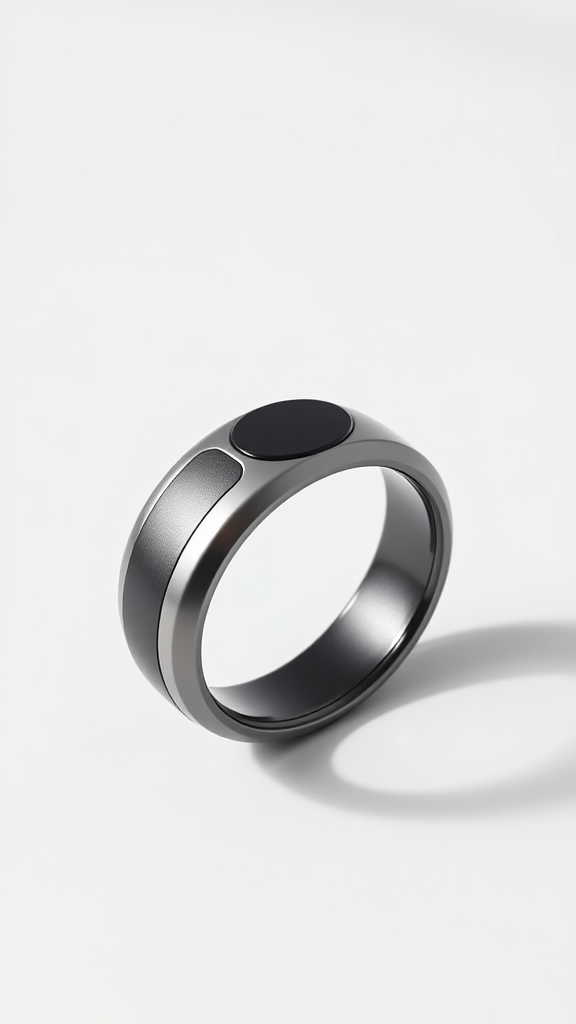
On hardware alone, the Oura Ring Gen 3 is exceptional. The titanium construction feels premium and durable. The DLC (Diamond-Like Carbon) coating on darker finishes resists scratching impressively well in real-world use. At just 4 to 6 grams depending on size, the ring is genuinely forgettable — and that is a compliment. You sleep in it, shower in it, swim in it (100m water resistance), and forget it exists until your phone buzzes with your morning stats.
Two styles are available: the Heritage, with its flat-edged profile reminiscent of the classic Oura design, and the Horizon, which has a smoother, more rounded profile similar to a conventional ring. Horizon is particularly popular among users who want it to pass as regular jewellery. Both are available in multiple finishes including silver, black, gold, and stealth.
One practical note on sizing: you must order a sizing kit before purchasing the ring itself. Oura sends you a set of plastic sizing rings to determine the correct fit. This is the right approach — wearing the wrong size compromises sensor accuracy — but it adds friction to the purchase process. Factor this into your timeline if buying as a gift.
What Real Buyers Are Saying
“I’ve tried Whoop, I’ve tried the Apple Watch for sleep. Nothing gave me the same clarity on my recovery as the Oura Ring. Six months in and I still check my readiness score before planning hard training sessions.” — ⭐⭐⭐⭐⭐ Verified Buyer
“The sleep tracking genuinely changed my habits. I knew alcohol affected my sleep, but seeing my HRV tank and my resting heart rate spike the morning after one glass of wine was the motivation I needed to actually cut back.” — ⭐⭐⭐⭐⭐ Verified Buyer
“Subscription fee aside, this ring told me I was about to get sick two days before I had any symptoms. Temperature spike showed up first in the app. Cancelled my gym sessions, rested, and what could have been a week-long illness lasted two days. Worth every penny.” — ⭐⭐⭐⭐⭐ Verified Buyer
And then there’s this review that honestly sums up the product better than we ever could: “I sleep better, feel better, and have never felt more judged by a piece of jewellery in my life.” — ⭐⭐⭐⭐⭐ Verified Buyer. Honestly, fair enough.
Value for Money
At its launch price, the Oura Ring Gen 3 was a premium purchase. Now that the Gen 4 is available, Gen 3 units can be found at meaningfully reduced prices — and that changes the value calculation considerably. If you can find a Gen 3 at a discounted price on Amazon, the hardware itself is still excellent and the sleep tracking remains competitive.
The subscription model is the main value consideration. At $5.99/month ($71.88/year), over two years of ownership you’re paying approximately $144 in subscription fees on top of the hardware cost. Over three years, $215. That’s the honest total cost of ownership, and it’s worth calculating before you buy.
For context: the Whoop 4.0 also requires a subscription, so the Oura isn’t uniquely predatory here. But subscription-free alternatives like the Ultrahuman Ring AIR and RingConn have entered the market and are worth investigating if recurring fees are a dealbreaker for you. For everything the Gen 3 does well — and it does a lot well — you’re paying for one of the most thoughtfully designed health-tracking devices ever made. At the right price point, that premium is justified.
Video Review
Where to Buy the Oura Ring Gen 3
The Oura Ring Gen 3 is available directly from Oura’s website and through major retailers. Amazon frequently lists both new and renewed units, and since the Gen 4 launch, Gen 3 prices have dropped. We recommend checking Amazon for current availability and pricing — you can see the latest deals on the Oura Ring Gen 3 here.
Ready to try the Oura Ring Gen 3?
Check current pricing on Amazon — Gen 3 deals are more common now that Gen 4 is out.
🎬 Video Reviews
📺 Watch the Full Review
Frequently Asked Questions
Does the Oura Ring Gen 3 require a subscription?
Yes. The Oura Ring Gen 3 requires a $5.99/month subscription to access its full feature set including sleep scoring, readiness scores, health trends, and detailed analytics. Without an active subscription, the ring provides extremely limited functionality — essentially making it non-functional for its core purpose. This is the most significant drawback of the Gen 3 and a key reason some users are exploring subscription-free alternatives.
How accurate is the Oura Ring Gen 3 for sleep tracking?
Sleep tracking accuracy is the Gen 3’s strongest suit. The finger-based optical sensor has a biomechanical advantage over wrist-worn trackers — higher blood vessel density near the surface means cleaner PPG readings. In practice, most long-term users report that the sleep stage data feels accurate and behaviorally useful. Clinical comparisons with polysomnography (the gold standard sleep study) show the Oura Ring Gen 3 performs competitively with other consumer sleep trackers, with sleep stage detection accuracy in the 70–80% range — which is typical for consumer devices.
What is the Oura Ring Gen 3’s battery life?
Battery life is rated at 4 to 7 days depending on usage and which features are active (SpO2 overnight monitoring draws more power). In real-world use, most users report consistent 5 to 6 day battery life. Charging takes roughly 20 to 80 minutes in the included charging dock. The recommended approach is to charge during a short period during the day — not overnight — so you keep wearing it during sleep.
How does the Oura Ring Gen 3 compare to the Gen 4?
The Gen 4 introduces improved sensor accuracy, a redesigned form factor with no flat edges (more comfortable for some users), and additional health metrics. For most users evaluating a Gen 3 at a reduced price, the core functionality — sleep tracking, readiness, HRV, temperature monitoring — is nearly identical. The Gen 4 is a meaningful but not revolutionary upgrade. If you find Gen 3 at a significantly lower price, it represents strong value.
Can the Oura Ring Gen 3 replace a fitness tracker or smartwatch?
For most athletes and fitness-focused users: no, not entirely. The Oura Ring Gen 3 lacks a display, GPS, real-time heart rate readout, and the granular workout metrics that dedicated GPS watches and fitness trackers provide. It excels at passive health monitoring — particularly sleep and recovery — and is best thought of as a complement to an active lifestyle rather than a replacement for a fitness watch. Many users wear both an Oura Ring and a GPS watch, using each for what it does best.
Conclusion
The Oura Ring Gen 3 remains one of the most impressive pieces of consumer health technology ever designed. The sleep tracking is genuinely best-in-class, the readiness score is actionable rather than gimmicky, and the hardware is premium enough to wear as everyday jewellery. If you’ve been curious about what your body is actually doing while you sleep, the Oura Ring Gen 3 will answer that question more thoroughly than almost anything else on the market.
That said, we can’t ignore the subscription model, and we can’t ignore that the smart ring market has matured considerably. Subscription-free alternatives now exist, and they deserve your attention before you commit. If you do decide the Gen 3 is right for you — especially at a reduced post-Gen 4 price — it’s a genuinely excellent device. You can grab the Oura Ring Gen 3 on Amazon and see current pricing and availability. Just go in with clear eyes about the total cost of ownership — and maybe brace yourself for a morning readiness score that knows about last night’s late dinner.