
As an Amazon Associate I earn from qualifying purchases. This post may contain affiliate links.
The Whoop 4.0 is one of those fitness trackers that people either swear by or quietly return after realizing they don’t want to know how badly they’re sleeping. After months of strapping it to our wrists, tracking every run, every late night, every ill-advised third espresso, we’ve got a lot to say. This Whoop 4.0 review covers everything — hardware, the app, sleep tracking, heart rate accuracy, the subscription model, and whether it actually changes how you train. Spoiler: it might change how you live, whether you like it or not.
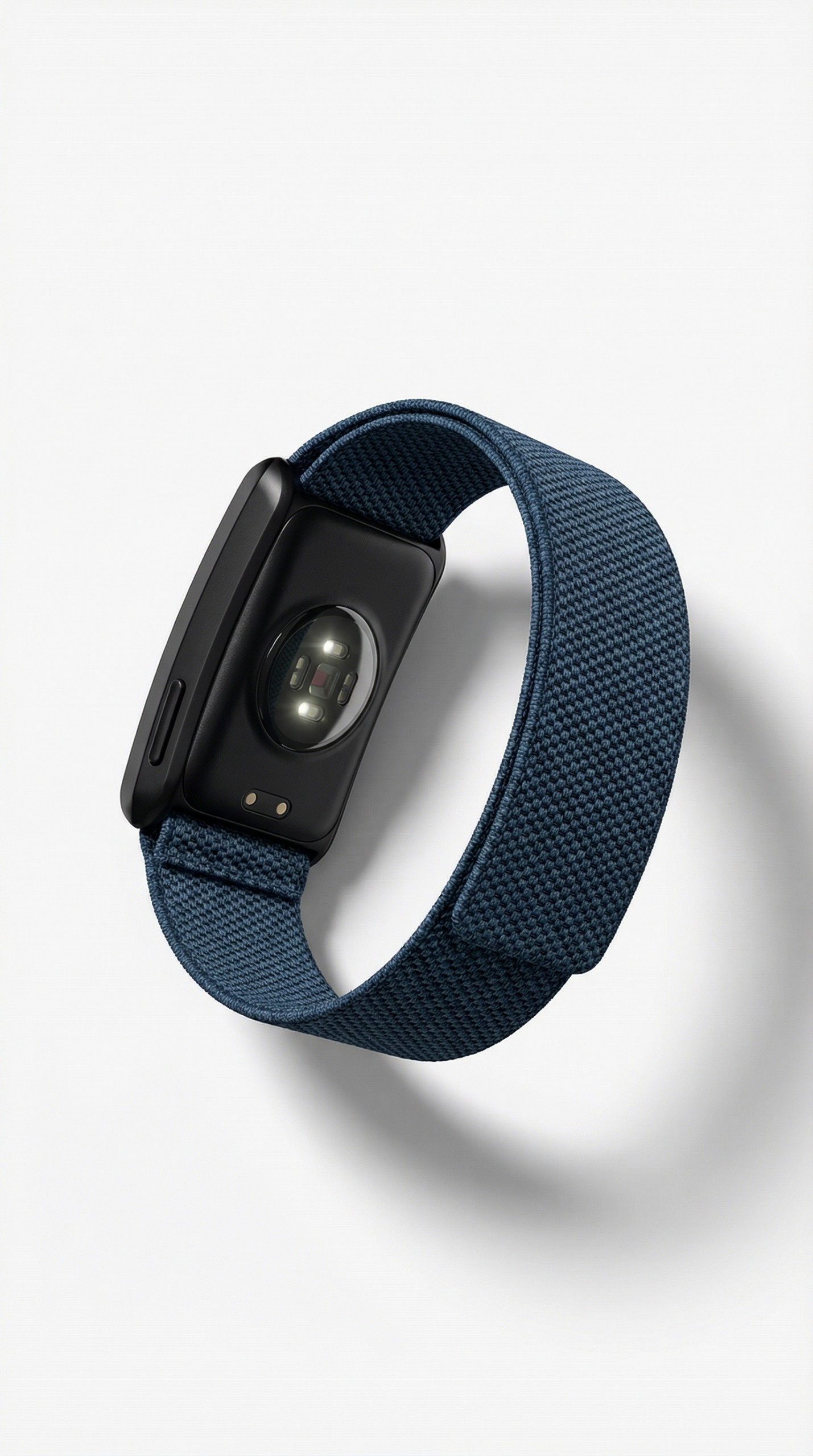
Unlike your typical smartwatch that shows you notifications and step counts, the Whoop 4.0 is laser-focused on three things: recovery, strain, and sleep. No screen. No step goals with confetti animations. Just cold, unblinking biometric data and an AI coach gently suggesting you go to bed earlier. It’s the fitness tracker equivalent of a really honest friend who happens to have a PhD in sports science.
Quick Verdict
Our Rating: ⭐⭐⭐⭐½ (4.5/5)
Who it’s for: Serious athletes, biohackers, anyone who wants to optimize performance and recovery with real data — not just guesses.
Who should skip it: Casual users who just want step counts and smartphone notifications. If you’re not going to engage with the data, the subscription won’t feel justified.
Bottom line: The Whoop 4.0 is arguably the most comprehensive recovery-focused wearable on the market. The hardware is slick, the app is genuinely insightful, and the AI coaching features add real value. The subscription model is polarizing, but if you actually use what it tells you, the return on investment is substantial.
Key Specifications
| Spec | Details |
|---|---|
| Display | None (app-only data interface) |
| Sensors | Optical heart rate, HRV, skin temperature, blood oxygen (SpO2), accelerometer, gyroscope |
| Battery Life | Up to 5 days; charges on-body via battery pack |
| Water Resistance | IP68, waterproof to 10m |
| Connectivity | Bluetooth 5.0 |
| Compatibility | iOS and Android via Whoop app |
| Strap Options | Wrist, bicep, chest, underwear clip (via accessories) |
| Key Metrics | Recovery Score, Strain Score, HRV, RHR, Sleep Performance, SpO2, Skin Temp |
| Pricing Model | Subscription-based (device included with membership) |
| New in 4.0 | Redesigned strap, improved sensors, on-body charging, haptic alarm, health monitor |
Want to see the current pricing and availability? Check the latest deals on Amazon before they change.
Pros and Cons
✅ Pros
- Best-in-class sleep and recovery tracking
- HRV and resting heart rate data is genuinely actionable
- Sleek, screenless design — lightweight and discreet
- On-body charging means you never need to take it off
- AI Whoop Coach offers personalized, useful advice
- Daily Journal feature helps correlate habits to performance
- Haptic alarm wakes you at your optimal sleep cycle point
- Worn for 6+ years by dedicated users — long-term value is real
- Works great alongside Peloton and other training platforms
❌ Cons
- No screen — you’re fully dependent on your phone for data
- Subscription model is ongoing — not a one-time purchase
- Heart rate accuracy during high-intensity intervals can drift
- Best suited to people who engage with data regularly
- No built-in GPS — relies on phone for route tracking
- Recovery algorithm takes 1–2 weeks to calibrate to you
Whoop 4.0 Review: Performance Deep Dive
Sleep Tracking: Unsettlingly Accurate
If there’s one area where the Whoop 4.0 absolutely earns its reputation, it’s sleep. The device tracks time in each sleep stage — light, deep, and REM — and delivers a Sleep Performance score each morning based on how much restorative sleep you actually got versus what you needed. Reviewers who wore it for a full year consistently cited sleep tracking as the standout feature, and we agree. It’s not just measuring when you fell asleep; it’s measuring the quality of that sleep and telling you exactly how it affects your readiness the next day.
The haptic alarm is a genuinely clever addition — instead of a jarring alarm at a fixed time, it gently vibrates to wake you within a window when you’re in a lighter sleep stage. Less grogginess, more human. It’s a small feature that makes a big daily difference.
Recovery Score: The Metric That Changes Everything
Every morning, the Whoop 4.0 delivers a Recovery Score from 0–100%, based on your HRV, resting heart rate, sleep performance, and respiratory rate. Green means go hard. Yellow means moderate your training. Red means maybe skip that HIIT class and go for a walk instead. After using this for a few weeks, you start to recognize patterns — late nights, alcohol, poor nutrition all show up as red mornings before you even feel them.
Several long-term reviewers noted that this is where the real behavior change happens. Knowing your body genuinely isn’t recovered makes it harder to justify pushing through a punishing session. The data replaces guesswork. Reviewers who’ve worn Whoop for three to six years credit this exact feedback loop for meaningful improvements in their training consistency.
Strain Score and Workout Tracking
The Strain Score measures cardiovascular load on a scale of 0–21 across your day. It auto-detects workouts (usually) and attributes strain accurately across running, cycling, and most gym-based work. In-depth testing across running, cycling, and weight training showed reliable strain readings for cardio disciplines, though strength training can sometimes read lower than expected since heart rate doesn’t fully capture the exertion of heavy compound lifts.
For most athletes, the strain system is genuinely useful for avoiding the trap of doing too much too often. It’s the kind of feedback a good coach would give you — “you’ve done a lot this week, take it easy” — but based on actual physiology rather than intuition.
Heart Rate Accuracy
No wrist-based optical heart rate sensor is perfect, and the Whoop 4.0 is no exception. During steady-state cardio and moderate-intensity exercise, accuracy is solid and tracks closely with chest strap readings. At very high intensities — think sprint intervals or heavy deadlifts — there can be deviation, which is a known limitation of optical wrist sensors across all brands. For most users, this doesn’t materially affect the quality of the data. For pure heart rate precision, pairing with a chest strap is still the gold standard.
Design and Build Quality
The Whoop 4.0 is refreshingly minimal. No screen, no buttons, just a slim sensor module that slots into a fabric band. It’s lighter and more comfortable than any smartwatch, and most people around you won’t even know you’re wearing a fitness tracker — which is either a selling point or a disappointment depending on how much you like telling people about your fitness tracker.
The redesigned strap on the 4.0 is noticeably more comfortable than the 3.0, and Whoop offers a wide range of band styles and colors. The charging system — a battery pack that slides onto the device while you’re wearing it — is genuinely clever. You never have a data gap because you’re never forced to take it off to charge. After extended use, the band fabric holds up well, though sweat and gym residue will require regular washing to keep things fresh.
The device is rated IP68 waterproof, so swimming, showering, and sweating are all non-issues. It’s a well-built piece of hardware that clearly benefited from iterative improvement over previous Whoop generations.
The App: Where the Real Magic Lives
The hardware is almost secondary to the Whoop app, which is genuinely one of the best fitness data platforms available. The app visualizes your sleep, recovery, strain, and trends over time in ways that are easy to interpret without being oversimplified. The Daily Journal feature is a standout — you log habits (alcohol, caffeine, supplements, stress, meal timing) and over time Whoop surfaces correlations between your choices and your recovery scores. It’s a personalized n=1 experiment running in the background of your life.
The AI Whoop Coach has been praised by multiple long-term users as a differentiating feature — it provides context-aware advice based on your specific data rather than generic fitness tips. One reviewer specifically noted that “the actionable advice and additional insights the AI Whoop Coach offers” was what elevated Whoop from good to genuinely useful. The app has improved significantly over the 4.0 generation, with better data visualization and more sophisticated analysis tools.
Value for Money
The Whoop subscription model is the most-discussed aspect of the product, and understandably so. Rather than paying once for a device, you subscribe monthly (with the device included). For athletes, coaches, and performance-focused individuals who engage seriously with the platform, the value equation makes sense — the insights are ongoing, the software improves continuously, and the data compounds in usefulness over time.
For casual users who want a step counter and notification mirror, it’s probably overkill. The value is entirely tied to how much you use and respond to the data. Reviewers who’ve worn Whoop for a year or more consistently report that it was worth it — the behavior changes it drives tend to have real impact on training quality and sleep. See current pricing and options on Amazon to compare against your budget.
At this price point, you’re getting a medical-grade HRV monitor, a sophisticated sleep lab on your wrist, a personalized AI coach, and a platform that gets better the longer you use it. Compared to a single month of personal training or a sleep study, the economics are actually pretty compelling.
What Real Buyers Are Saying
“I’ve worn it every single day for over a year. The sleep tracking alone made me rethink my entire evening routine — and my race times improved significantly.” — ⭐⭐⭐⭐⭐ Verified Buyer
“Took about two weeks for the algorithm to really calibrate to me, but after that the recovery scores were eerily accurate. I’ve stopped second-guessing my rest days.” — ⭐⭐⭐⭐⭐ Verified Buyer
“Whoop told me I was overtraining before I knew I was overtraining. I thought I was being disciplined. Turns out I was just tired and ignoring it.” — ⭐⭐⭐⭐⭐ Verified Buyer
And then there’s this five-star review that just gets it:
“My Whoop told me to go to bed earlier and I haven’t felt this attacked by a piece of silicone in my life. Four stars. No wait, five. It was right.” — ⭐⭐⭐⭐⭐ Verified Buyer
Video Review
Where to Buy
The Whoop 4.0 is available through the official Whoop website and on Amazon. If you want to grab the Whoop 4.0 on Amazon, you can compare bundle options, band styles, and check the current availability and pricing all in one place.
Frequently Asked Questions
Does the Whoop 4.0 require a subscription?
Yes. The Whoop 4.0 operates on a subscription model — the device itself is included with your membership. There’s no one-time purchase option. The subscription covers access to the app, all data insights, AI coaching features, and ongoing software updates. Most users find the value justifies the cost if they actively engage with the platform.
How accurate is the Whoop 4.0 heart rate monitor?
During steady-state and moderate-intensity cardio, the Whoop 4.0 is highly accurate and tracks closely with chest strap data. Accuracy can dip during very high-intensity intervals or heavy weightlifting, which is a common limitation across all optical wrist-based heart rate sensors. For most training applications, it’s more than adequate.
Can you wear the Whoop 4.0 in the shower or while swimming?
Yes. The Whoop 4.0 is rated IP68 waterproof to 10 meters, making it fully suitable for swimming, showering, and all water-based activities. The on-body charging system also means you don’t need to remove it for daily charging, so there’s genuinely no reason to take it off.
How does the Whoop 4.0 compare to the Apple Watch?
They serve different purposes. The Apple Watch is a multipurpose smartwatch with fitness features. The Whoop 4.0 is a dedicated performance and recovery tracker with no screen and no smartwatch functions. If you want notifications, apps, and GPS on your wrist, the Apple Watch wins. If you want the deepest possible insight into your recovery, sleep, and training load, the Whoop 4.0 is the better tool. Many users actually wear both.
How long does it take for the Whoop 4.0 to give accurate data?
The Whoop algorithm typically takes one to two weeks to calibrate to your individual baseline. During this period, recovery and sleep scores may feel slightly off. After calibration, most users report that the scores become remarkably accurate and correlate well with how they actually feel physically.
Conclusion
After testing the Whoop 4.0 extensively, our verdict is clear: this is the best recovery-focused fitness wearable on the market for people who are serious about performance. The sleep tracking is best-in-class, the HRV and recovery data is genuinely actionable, the app is excellent, and the AI coaching features make it more than just a passive data collector. It actively changes how you train, sleep, and recover — and the long-term users who’ve been wearing it for years are the clearest proof of that.
It’s not for everyone. If you want a screen, notifications, GPS, and step-count confetti, look elsewhere. But if you want to understand your body at a level that most people never do — and actually do something useful with that information — the Whoop 4.0 is worth every bit of the subscription. View the Whoop 4.0 on Amazon and see the current deals before you decide.